


Garbage Disposal Not Working? What to Check Before You Call a Plumber


Licensed & Insured
Fully credentialed plumbers you can trust in your home.

Fast Response
Same-day service and 24/7 emergency availability.
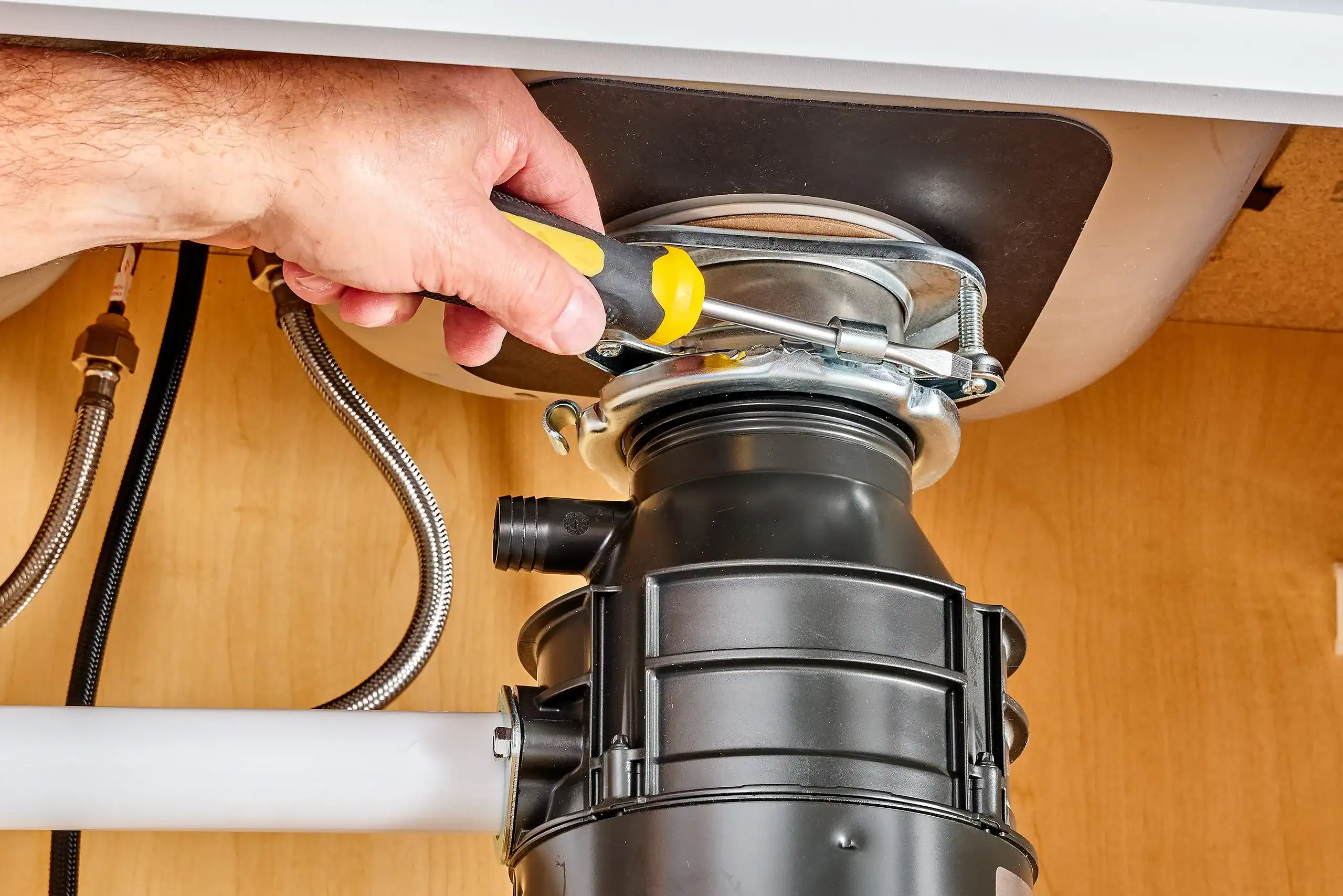
What would you do if your garbage disposal quit in the middle of cooking dinner? The sink fills with scraps, the smell builds fast, and the one appliance designed to make cleanup easier suddenly refuses to work.For many homeowners, the first instinct is panic, followed quickly by reaching for the phone to Google "emergency plumber near me." But hold up! Before you spend $200 on a service call, consider this: most garbage disposal "failures" aren't actually failures at all. They're usually power hiccups or simple jams that you can fix in about the same time it takes to find a plumber's phone number.The trick is knowing which problems you can handle yourself and which ones actually need a pro, which is what we’re going to discuss in this article. Getting this wrong in either direction costs you either unnecessary service fees or a burned-out motor from trying to fix something that's actually broken.
Step One: Rule Out Power Issues
It sounds almost insulting to suggest, but a shocking number of disposal emergencies are just power problems in disguise. If your unit has gone completely silent, with no humming or grinding, the issue might be electrical rather than mechanical.Start with the obvious stuff:
- Check the actual plug connection: Garbage disposals shake and vibrate during normal operation, and over time, this can work the plug loose from the outlet. It happens more often than you'd think, and it's the kind of fix that makes you feel slightly foolish but also relieved.
- Look for the reset button: Every disposal has a small button somewhere on the bottom of the unit, usually red or black. If the disposal has overheated or experienced an electrical surge, this button pops out as a safety measure. Push it back in firmly and see what happens.
- Check your electrical panel: If the disposal is still lifeless, walk over to your breaker box and look for a tripped breaker. Disposals sometimes trip their own breakers when they're overloaded or jammed.
If any of these steps bring your disposal back to life, you've just avoided a service call and learned something useful about your kitchen's quirks.
Step Two: Look for a Jam
Sometimes the disposal will hum when you flip the switch, but the blades do not move. That hum is the motor trying to work against something that is stuck. Common culprits include food scraps that didn't make it through the first time, a piece of silverware that took an unexpected dive, or fibrous materials like celery strings that have wound themselves around the grinding mechanism like tiny green ropes.Here's how to handle this safely:
- Kill the power completely: Either unplug the unit or turn off the breaker. This step is non-negotiable. Garbage disposals may look broken, but they're perfectly capable of starting up unexpectedly and causing serious injury.
- Locate the hex wrench: Most disposals come with a small L-shaped hex wrench, often attached to the side of the unit with a metal clip. This wrench fits into a hexagonal hole at the very bottom of the disposal. Insert it and turn it back and forth—you're manually rotating the grinding mechanism to free whatever's stuck.
- Remove the obstruction: Once you've loosened things up with the hex wrench, use tongs or needle-nose pliers to extract whatever caused the jam. You might find food scraps, small utensils, or stringy materials wrapped around the blades. Never reach into the disposal with your bare hands, even when the power is off.
After you've cleared the obstruction and the blades turn freely, restore power and test the disposal. Many homeowners are genuinely surprised by how often this simple process solves the problem entirely.
Step Three: Listen Closely
A healthy garbage disposal makes a steady grinding sound. If you hear screeching, rattling, or grinding metal, the problem is more serious. It could mean blades are worn, parts are loose, or foreign objects are inside the chamber.These problems rarely improve on their own. If the noise continues, that is the point where calling a licensed plumber makes sense. Ignoring unusual sounds often leads to bigger breakdowns and more costly repairs later.
Step Four: Know When to Call for Help
Some disposal problems cannot be solved with quick checks. You will need professional help if:There are certain disposal problems that cannot be solved with quick checks. A professional should be called in if:
- The unit leaks water from the body or the plumbing connections
- The breaker trips repeatedly, even after resets
- The blades remain stuck, even after trying to clear them
- The motor runs, but the disposal does not grind effectively
In these cases, a licensed plumber can inspect the unit, determine whether Garbage Disposal Repair will fix the problem, or recommend replacement if it makes more sense.
Step Five: Prevent the Next Breakdown
Like any appliance, disposals last longer when treated well. Good habits reduce strain on the motor and keep the system working smoothly. Keep these practices in mind:
- Run cold water every time you use the disposal: Cold water helps flush food waste through the system and keeps grease from hardening in your pipes. Keep the water running for about 15 seconds after you turn off the disposal to ensure everything clears the pipes.
- Avoid problematic foods: Fibrous materials like celery stalks, corn husks, and potato peels tend to wrap around the grinding mechanisms and cause jams. Grease and cooking oils harden in your pipes and create blockages. Bones, fruit pits, and other hard materials can damage the grinding components.
- Feed waste gradually rather than all at once: Even powerful disposals can get overwhelmed if you dump too much material in at once. Take your time and let the disposal work through smaller amounts.
- Clean it occasionally: Drop some ice cubes into the disposal and run it to help clean the grinding components. The ice acts as a mild abrasive that removes buildup without causing damage.
These small steps add years to the life of the disposal and cut down on unexpected breakdowns.
Know When to Stop Tinkering and Start Dialing
A garbage disposal that quits is frustrating, but it does not always mean disaster. By checking power, clearing jams, and listening for warning signs, you can often spot whether the issue is simple or serious.But there's a fine line between being handy and being stubborn. If you've checked the power, tried to clear a jam, and your disposal is still acting up, that's usually your cue to step back. Persistent electrical issues, mysterious leaks, or grinding problems that don't respond to basic fixes often indicate deeper issues that require professional diagnosis.When the simple fixes don't work, it's time to call Cornwell Plumbing. Our experienced technicians can quickly determine whether your disposal needs a straightforward repair, component replacement, or if replacement makes more economic sense. We also catch underlying plumbing issues that might be affecting your disposal's performance - problems that aren't obvious to most homeowners but can cause recurring headaches if left unaddressed.The smart approach: try the basic troubleshooting steps first, but don't let pride turn a manageable repair into a costly replacement project.

Need a Plumber Today?
Our experienced plumbers are ready to help with fast, reliable service. Get help in hours, not days.

Indiana State Plumbing Contractor
License #PC10802621


 601 S Dan Jones Rd suite 2 d, Avon, IN 46123 | (317) 961-7305
- 5724 N Green St 2nd Floor, Brownsburg, IN 46112 | (317) 699-7188
- 75 E Pine St, Zionsville, IN 46077 | (317) 747-2166
- 248 N Woodridge Dr, Pittsboro, IN 46167 | (317) 318-0505
